

The S.E.N.S.E. Framework: Redesigning Work for the AI Era
WORKSHOPS · 03 · HALF-DAY COURSE
WORKSHOPS · 03 · HALF-DAY COURSE
The S.E.N.S.E. Framework: Redesigning Work for the AI Era
A 3.5-hour session for leaders redesigning how one real team works alongside AI. Participants leave with a redesigned workflow for that team, a capability gap map, and a first-quarter learning plan.
You leave with
- Redesigned workflow
- Capability gap map
- Quarter-one learning plan
- What to strengthen next
Duration
3.5 hours, single session
Format
In-person or virtual
Cohort size
Max 24 participants
Requires
One real team or role to redesign
Facilitator
Creator of the S.E.N.S.E. framework; former Deputy Director, SMU Academy
Author of
Making S.E.N.S.E. of AI for SMEs (2025); Making S.E.N.S.E.: The End of Human Intelligence Dominance As We Know It (2026)
CPD / CPE hours
4 CPD hours
Certificate on completion
Certificate of Completion, Praxora Lab
Overview
What must strengthen in a workforce as AI takes on more of the routine work
The World Economic Forum's Future of Jobs Report 2025 projects that global employers expect thirty-nine percent of core workforce skills to change by 2030, driven substantially by AI and information-processing technologies, while McKinsey's own research argues that as automation absorbs routine cognitive work, distinctly human skills, judgement, adaptability, complex communication, become the scarcer and more valuable capability, not a soft-skill afterthought. PwC's 2025 Global AI Jobs Barometer already finds wage growth accelerating faster in roles with high AI exposure than in roles without it, evidence the reskilling question is not hypothetical, it is already showing up in pay. Yet LinkedIn's 2025 Workplace Learning Report finds most organisations still default to generic AI-literacy training rather than a workflow-specific capability plan.
Michael Low built the S.E.N.S.E. framework from the same recognition-of-prior-learning method he piloted with SkillsFuture Singapore, on the premise that most teams already hold more of the needed capability than a generic competency framework credits them with. Participants leave with a capability gap map built from evidence for one real team, not a training-needs survey, and a first-quarter learning plan sequenced to what that specific team is actually missing.
Why Praxora
Why this, not a platform
A redesigned workflow for your own team, not a generic AI-adoption template.
-
Practitioner-led, not faculty-assigned
Michael Low, creator of the S.E.N.S.E. framework and former Deputy Director at SMU Academy, teaches this course because he built the method in it.
-
A named framework, not a licensed template
Built on the S.E.N.S.E. framework, his own recognition-of-prior-learning method, not a licensed workforce-training template.
-
One real, produced output — not a case study
Every session ends with a redesigned workflow, a capability gap map and a first-quarter learning plan for the team you bring in.
-
A small, capped cohort
Max 24 participants, so the room works from one real team, not a generic cohort.
-
Built on institutions that already trust it
The evidence-based method behind it was piloted directly with SkillsFuture Singapore.
-
One focused session — not an 18-week course
3.5 hours, one session. No cohort waitlist, no months of drip-fed modules.
Key takeaways
What participants leave with
-

A redesigned workflow for one real team, built on the S.E.N.S.E. framework rather than a generic AI-adoption template.
-

A capability gap map showing what the team already has, often more than anyone credits them with, and what is genuinely missing.
-

A sequenced first-quarter learning plan ready to hand to L&D.
-

A clear, evidence-based answer to what must be deliberately strengthened as AI takes on more of the routine work.
See a full sample of these documents › Filled out for a fictional company, so you can judge the format before enquiring.
Objective
Apply the S.E.N.S.E. framework to redesign one real team's workflow for human-AI collaboration, and produce a capability gap map for that team.
Participants bring one team or role. The session draws on the same evidence-based recognition-of-prior-learning method Michael Low piloted with SkillsFuture Singapore to assess what a team already has before deciding what it needs.
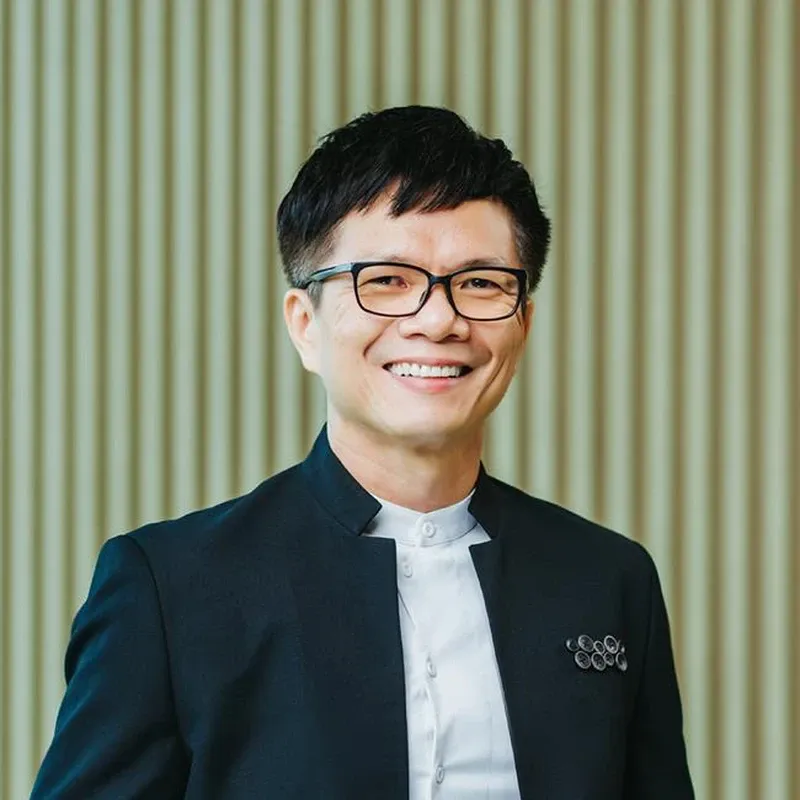
AI transformation strategist, human capability architect and educator with over twenty years across government, higher education and industry, and creator of the S.E.N.S.E. framework for responsible, human-centred AI adoption. Former Deputy Director at SMU Academy and the Singapore Institute of Technology, now founder of SENSE Collective, advising organisations and institutions on moving beyond AI experimentation to purposeful, measurable adoption.
Why this course
The question this course is built around, as AI becomes more capable, what must humans and organisations deliberately strengthen, is one I have been sitting with since long before generative AI made it fashionable to ask. I spent nine years inside Singapore Government agencies watching capable people get displaced by policy shifts they had no say in, and it left me with a lasting discomfort about frameworks that treat workforce transformation as something done to people rather than with them.
The Recognition of Prior Learning pilot I ran with SkillsFuture Singapore taught me something I did not expect going in: most teams already have more of the capability they need than anyone credits them with, buried in tacit judgment nobody wrote down. S.E.N.S.E. exists because I got tired of watching organisations skip straight to a training calendar without first taking an honest inventory of what a team already knows. When I stand in front of a room running this course, I am not selling a framework. I am trying to give one team the same fair, evidence-based look at their own capability that I wish every displaced professional I met in government service had been given before the decision was made about them.

Syllabus
Four segments across 3.5 hours
Left with a redesigned workflow for one real team, a capability gap map, and a first-quarter learning plan.
-
20 min
Framing
What capability must strengthen as AI grows more capable.
- One real team or role selected as the session's working unit
- What capability must deliberately strengthen as AI takes on more routine work
- Why a cross-functional group works less well here than one intact team
OutputTeam or role selected for the session
-
1 hr 10 min
The S.E.N.S.E. framework, applied
Applied directly to the room's own team.
- The S.E.N.S.E. framework, walked through against the room's own team
- Redesigning the workflow itself, not just naming a tool to adopt
- The evidence-based recognition-of-prior-learning method behind it, piloted with SkillsFuture Singapore
OutputWorkflow redesign draft
-
15 min
Break
-
1 hr
Capability gap mapping
What is missing, what already transfers.
- What the team already has, usually more than anyone credits them with
- What is genuinely missing, versus what already transfers from adjacent skills
- A capability gap map built from evidence, not a generic competency framework
OutputCapability gap map
-
45 min
Close
A sequenced first-quarter learning plan.
- The redesigned workflow and capability gap map brought together
- A sequenced first-quarter learning plan, ready to hand to L&D
OutputQuarter-one learning plan
Who should attend
Whoever owns the team's workflow, not just its headcount
-
People & culture leaders
People and culture, HR and L&D leaders redesigning how a function works.
-
Team leads & managers
Team leads and managers piloting AI tools inside their own team.
-
Operations leaders
Operations leaders assessing where capability, not just tooling, is the constraint.
Facilitator
Michael Low
AI Transformation Strategist & Human Capability Architect
Two decades turning AI ambition into workforce capability, from national curriculum policy to the SME floor.
Read the full profile ›Common questions
Before you enquire
-
What team should we bring, if we're sending more than one person?
One team or role per participant works best, since the workflow redesign is built around a specific team in the room. A manager and one or two members of the same team, rather than four people from four different functions, produces the most useful capability gap map.
-
Do participants need to already use AI tools day to day?
No. The session works from the team's current workflow, not from prior AI fluency. Redesigning the workflow is the objective; adopting a specific tool is a downstream decision, not a prerequisite.
-
How is this different from generic reskilling or change-management training?
It uses the same evidence-based recognition-of-prior-learning method Michael Low piloted with SkillsFuture Singapore, so the capability gap map is built from what a team demonstrably already has, not a generic competency framework applied uniformly.
-
How does this relate to Building the AI-Ready Workforce, the integrated programme?
This course is one of the three pillars in that one-day programme, run alongside Sameen Khan's data-governance course and Joshua Lau's hands-on GenAI course. HR, L&D and COO buyers building a full workforce adoption roadmap should look at the integrated programme instead.
-
Is there a discount for sending more than one person, or booking more than one course?
Yes. Organisations sending leadership through more than one course, or through a course and its integrated programme, get a combined rate rather than separate bookings. See the corporate and bulk enrolment section on the workshops page, or raise it directly in your enquiry.
-
What if I need to cancel, defer or a session is rescheduled?
Full terms for individual, open-cohort and corporate in-house bookings, including deferral windows and what happens if Praxora Lab cancels a session, are set out in the refund and cancellation policy.
-
What happens after the session ends?
Every cohort joins a standing network of practitioners and business leaders: ongoing networking events, fireside chats, and case study interviews with business owners and C-suite leaders on AI projects they've recently completed. The named facilitator also stays the point of contact for questions on applying what was covered.
Industry engagement
A network that keeps working after the workshop ends
Every cohort at Praxora Lab joins a standing network of practitioners and business leaders, not a one-off attendee list. Alumni are invited back for ongoing networking events, fireside chats with industry experts, and case study interviews with business owners and C-suite leaders on AI projects they have recently completed, a running view of what adoption actually looks like once the workshop room empties.
The learning experience
A small cohort, led by the practitioner who built the course
Every session is capped at a small cohort and taught in person by the practitioner who built it, not a teaching assistant working from someone else's slides. Participants work against one real team's own workflow rather than a generic case study, and leave with a draft they can put to use immediately.
A named facilitator, not a support desk, stays the point of contact after the session for questions on applying what was covered.
Investment
Open cohort or corporate in-house
Open cohort
On enquiry
Per participant, max 24 participants
- Certificate on completion: Certificate of Completion, Praxora Lab
- Workflow redesign draft, for one real team
- Capability gap map
- Quarter-one learning plan
Corporate in-house
On enquiry
Fixed programme fee, max 24 participants
- Everything in the open cohort
- Dedicated session for one organisation, on one of your own teams
- Fixed fee, not priced per head
- Group rates with Building the AI-Ready Workforce
Full cancellation, deferral and refund terms are set out in the refund and cancellation policy.
Enquire about upcoming dates