
AI-Assisted Crisis Communications & Decision Intelligence
WORKSHOPS · 11 · HALF-DAY COURSE
WORKSHOPS · 11 · HALF-DAY COURSE
AI-Assisted Crisis Communications & Decision Intelligence
A four-hour session for communications, risk and reputation leaders building a command-centre response for a real crisis scenario. Participants leave with a stress-tested response plan, an AI-assisted monitoring and decision framework, and a stakeholder-alignment map for their own scenario.
You leave with
- Monitoring & decision framework
- Command-centre response plan
- Stress-tested response plan
- Post-crisis review checklist
Duration
4 hours, single session
Format
In-person or virtual
Cohort size
Max 24 participants
Requires
One real or anticipated reputational-risk scenario
Facilitator
Media Entrepreneur, Publisher & AI Strategist
Managed crisis comms for
IMDA's predecessor, the Malaysian Ministry of Health
CPD / CPE hours
4 CPD hours
Certificate on completion
Certificate of Completion, Praxora Lab
Overview
Misinformation now spreads faster than most crisis playbooks were built to respond to
MIT researchers, publishing in Science, found false stories on social media are seventy percent more likely to be reshared than true ones and reach their first 1,500 people roughly six times faster, driven by human sharing behaviour, not bots. The World Economic Forum's Global Risks Report 2026 now ranks misinformation and disinformation as the second most severe global risk over a two-year horizon, behind only geoeconomic confrontation, and Edelman's 2026 Trust Barometer finds fifty percent of respondents cite misinformation as a key factor eroding institutional trust over the past five years. AI has not created this dynamic; it has expanded who can produce convincing false content at scale, and how fast.
Kumaran Pillai built this course's command-centre discipline from managing crisis communications for regulators and major institutions directly, including engagements with IMDA's predecessor and the Malaysian Ministry of Health, not a communications theory course. Participants leave with a stress-tested response plan for one real scenario, naming who checks what, who speaks, and who has the authority to say wait, decided before a crisis starts rather than during one.
Why Praxora
Why this, not a platform
A response plan stress-tested before the crisis, not during it.
-
Practitioner-led, not faculty-assigned
Kumaran Pillai teaches this course because he has stood in the command centre himself, not studied one from the outside.
-
A named framework, not a licensed template
Built on the same command-centre discipline he used managing crisis communications for regulators and major institutions.
-
One real, produced output — not a case study
Every session ends with a stress-tested response plan for the scenario you bring in, not a generic crisis-comms checklist.
-
A small, capped cohort
Max 24 participants, so the room works from a real or anticipated scenario, not a hypothetical drill.
-
Built on institutions that already trust it
Built from engagements with IMDA's predecessor and the Malaysian Ministry of Health.
-
One focused session — not an 18-week course
4 hours, one session. No cohort waitlist, no months of drip-fed modules.
Key takeaways
What participants leave with
-

An AI-assisted monitoring and decision framework for real-time information flows and risk detection.
-

A command-centre response plan naming who checks what, who speaks, and who has the authority to say wait.
-

A stress-tested version of that plan, pressure-tested against a sceptical, high-intensity read.
-

A post-crisis review checklist, so the first time the plan is used is not the day it actually matters.
See a full sample of these documents › Filled out for a fictional company, so you can judge the format before enquiring.
Objective
Apply AI-assisted decision intelligence to one real crisis-communications or reputational-risk scenario, and build a command-centre response plan that holds up under regulatory and public scrutiny.
Participants bring one real or anticipated reputational-risk scenario. The session works from Kumaran Pillai's own command-centre experience managing crisis communications for regulators and major institutions, including engagements with IMDA's predecessor and the Malaysian Ministry of Health, applying AI-assisted monitoring and decision intelligence to the room's own scenario.
Founder and publisher of The Independent Singapore with over two decades in digital media, strategic communications and crisis management for regulators and major institutions, now applying AI to decision-making and risk detection under pressure.
Why this course
I have stood in a command centre while a story was still unfolding, watching information arrive faster than anyone in the room could verify it, more times than I can comfortably count. What I learned managing crisis communications for regulators and major institutions is that the organisations that come through intact are rarely the ones with the best press release. They are the ones who had already decided, before the crisis started, who checks what, who speaks, and who has the authority to say wait before a wrong claim goes out under their name.
I built this course because AI has changed the speed at which misinformation and genuine risk signals now arrive at the same time, and most crisis playbooks were written for a slower world than the one we are actually operating in. As a publisher, I have watched newsrooms and institutions alike mistake speed for competence, and I have made that mistake myself, early in my career, in ways I still think about. What I want to hand a communications or risk leader in four hours is not a script. It is the same command-centre discipline I had to learn under real pressure, stress-tested against a scenario they bring into the room themselves, so the first time they use it is not the day it actually matters.

Syllabus
Six segments across four hours
Left with a stress-tested response plan for one real crisis scenario, an AI-assisted monitoring and decision framework, and a stakeholder-alignment map, not a generic crisis-comms checklist.
-
20 min
Framing
The scenario in the room, and what a command centre needs in the first hour.
- One real or anticipated reputational-risk scenario, named up front
- What a command centre actually needs decided in the first hour
- Who currently has the authority to say wait, and whether that's written down anywhere
OutputScenario brief
-
55 min
AI-assisted monitoring and decision intelligence
Real-time information flows and risk detection, applied to the room's own scenario.
- Real-time information flows and risk detection, applied to the room's own scenario
- Separating a genuine risk signal from noise, at the speed information actually arrives
- Where AI-assisted monitoring helps a command centre, and where it just adds volume
OutputMonitoring and decision framework
-
15 min
Break
-
1 hr
Command-centre response design
Stakeholder alignment, message discipline and escalation, under regulatory and public scrutiny.
- Naming who checks what, who speaks, and who has the authority to say wait
- Stakeholder alignment and message discipline under regulatory and public scrutiny
- Escalation steps decided before the crisis starts, not during it
OutputCommand-centre response plan
-
1 hr
Stress-testing the plan
Pressure-testing the response against a sceptical, high-intensity read.
- Pressure-testing the response plan against a deliberately sceptical, high-intensity read
- Where the plan holds, and where it quietly assumes too much
- The same command-centre discipline built under real regulatory and institutional pressure
OutputStress-tested response plan
-
30 min
Roadmap and close
- The monitoring framework and response plan brought into one document
- A post-crisis review checklist, so the first time the plan is used isn't the day it actually matters
OutputPost-crisis review checklist
Who should attend
Whoever is the public face when it matters
-
Communications & PR leaders
Heads of communications, PR and reputation management at regulated or public-facing organisations.
-
Risk & compliance leaders
Risk and compliance leaders who own escalation during a reputational crisis.
-
Founders & executives
Founders and executives who would be the public face of their organisation's own crisis response.
Facilitator
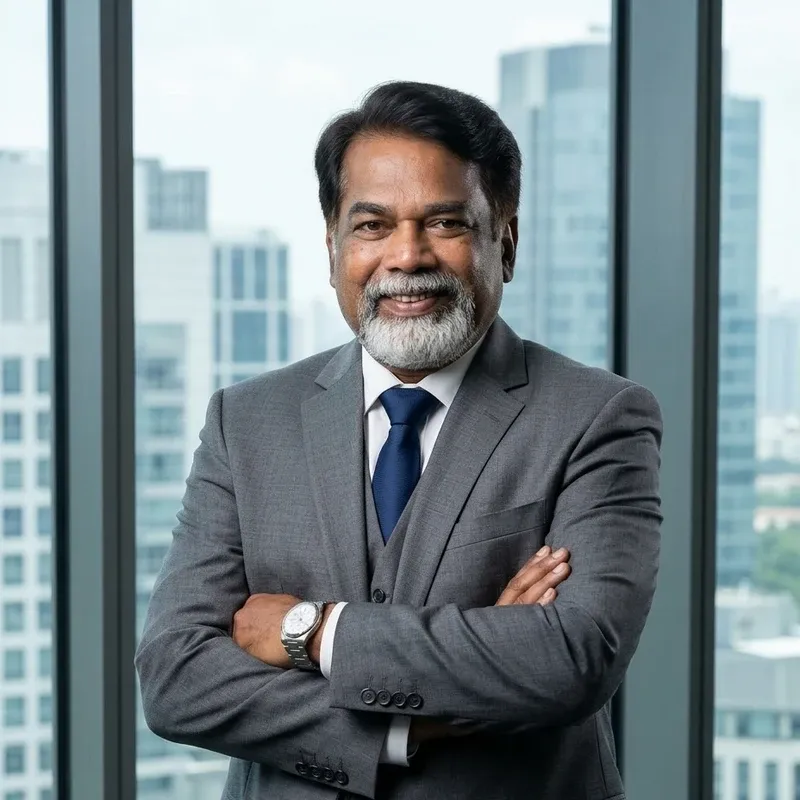
Kumaran Pillai
Media Entrepreneur, Publisher & AI Strategist
Publisher turned AI strategist, applying two decades of crisis communications experience to how organisations decide under pressure.
Read the full profile ›Common questions
Before you enquire
-
Is this only for organisations that have already faced a crisis?
No. It is built for real or anticipated reputational-risk scenarios, and most participants come in before a crisis, not after one, to build the command-centre discipline in advance.
-
Does this cover legal or regulatory crisis response, or communications only?
Communications, stakeholder alignment and decision intelligence. Legal and regulatory obligations inform the plan built in the room, but the session does not provide legal advice.
-
Is the AI-assisted monitoring segment tool-specific?
No. It covers the monitoring and decision-intelligence discipline, real-time information flows and risk detection, not a recommendation for a specific platform.
-
What should participants prepare in advance?
One real or anticipated reputational-risk scenario, with a rough sense of the stakeholders and regulators involved. No reading or technical prep needed.
-
Is there a discount for sending more than one person, or booking more than one course?
Yes. Organisations sending leadership through more than one course, or through a course and its integrated programme, get a combined rate rather than separate bookings. See the corporate and bulk enrolment section on the workshops page, or raise it directly in your enquiry.
-
What if I need to cancel, defer or a session is rescheduled?
Full terms for individual, open-cohort and corporate in-house bookings, including deferral windows and what happens if Praxora Lab cancels a session, are set out in the refund and cancellation policy.
-
What happens after the session ends?
Every cohort joins a standing network of practitioners and business leaders: ongoing networking events, fireside chats, and case study interviews with business owners and C-suite leaders on AI projects they've recently completed. The named facilitator also stays the point of contact for questions on applying what was covered.
Industry engagement
A network that keeps working after the workshop ends
Every cohort at Praxora Lab joins a standing network of practitioners and business leaders, not a one-off attendee list. Alumni are invited back for ongoing networking events, fireside chats with industry experts, and case study interviews with business owners and C-suite leaders on AI projects they have recently completed, a running view of what adoption actually looks like once the workshop room empties.
The learning experience
A small cohort, led by the practitioner who built the course
Every session is capped at a small cohort and taught in person by the practitioner who built it, not a teaching assistant working from someone else's slides. Participants work against one real team's own workflow rather than a generic case study, and leave with a draft they can put to use immediately.
A named facilitator, not a support desk, stays the point of contact after the session for questions on applying what was covered.
Investment
Open cohort or corporate in-house
Open cohort
On enquiry
Per participant, max 24 participants
- Certificate on completion: Certificate of Completion, Praxora Lab
- Monitoring and decision framework
- Command-centre response plan
- Stress-tested response plan
- Post-crisis review checklist
Corporate in-house
On enquiry
Fixed programme fee, max 24 participants
- Everything in the open cohort
- Dedicated session for one organisation, on your own scenario
- Fixed fee, not priced per head
Full cancellation, deferral and refund terms are set out in the refund and cancellation policy.
Enquire about upcoming dates