

Venture Creation & Deep-Tech IP Strategy
WORKSHOPS · 09 · HALF-DAY COURSE
WORKSHOPS · 09 · HALF-DAY COURSE
Venture Creation & Deep-Tech IP Strategy
A four-hour session for founders, corporate innovation leads and researchers validating a real venture or technology idea. Participants leave with a validated business model canvas, an IP-protection and commercialisation plan, and a go-to-market sequence for their own idea.
You leave with
- Business model canvas
- IP-protection plan
- Go-to-market brief
- 90-day roadmap
Duration
4 hours, single session
Format
In-person or virtual
Cohort size
Max 24 participants
Requires
One venture idea, corporate spin-out or deep-tech concept
Facilitator
Venture Creation Instructor & Deep-Tech Mentor; 12 patent families
Lead Instructor
NUS, NTU and SUSS venture-creation programmes
CPD / CPE hours
4 CPD hours
Certificate on completion
Certificate of Completion, Praxora Lab
Overview
Deep-tech capital is growing faster than most founders' IP strategy keeps pace with
Singapore climbed to fourth place globally in the 2025 Global Startup Ecosystem Index, behind only Israel, the UK and the US, and captured roughly sixty percent of ASEAN's venture-capital deal volume in 2024, with deep tech named as one of the ecosystem's standout strengths. Enterprise Singapore backed that growth directly in October 2024, adding S$440 million to the Startup SG Equity scheme and raising the government's co-investment cap per deep-tech startup from S$8 million to S$12 million. WIPO's own commercialisation programming exists because the gap it identifies is real: deep-tech ventures carry longer R&D cycles, higher capital needs and more complex IP considerations than a typical software startup, and a founder who treats IP as paperwork rather than sequencing usually finds that out from an investor, not from a mentor.
Patrick Ng built this course's IP-protection method from twenty-five years as a corporate innovation leader and inventor holding twelve patent families, and the same lean-startup practicum he leads for NUS, NTU and SUSS venture-creation programmes. Participants leave with a validated business model canvas and an IP-protection plan for one real venture, stating what to patent, what to keep as trade secret, and when, sequenced ahead of the funding conversation rather than reacting to it.
Why Praxora
Why this, not a platform
A business model canvas and IP plan for your own venture, not a generic template.
-
Practitioner-led, not faculty-assigned
Patrick Ng, holder of twelve patent families, teaches this course because he has protected his own inventions, not just studied someone else's.
-
A named framework, not a licensed template
Built on the same lean-startup practicum method he leads for NUS, NTU and SUSS venture-creation programmes.
-
One real, produced output — not a case study
Every session ends with a validated business model canvas and an IP-protection plan for the venture you bring in.
-
A small, capped cohort
Max 24 participants, so the room works from one real idea, not a generic startup framework.
-
Built on institutions that already trust it
Built from twenty-five years as a corporate innovation leader, teaching venture creation at NUS, NTU and SUSS.
-
One focused session — not an 18-week course
4 hours, one session. No cohort waitlist, no months of drip-fed modules.
Key takeaways
What participants leave with
-

A validated business model canvas for one real venture or technology idea, not a case study.
-

An IP-protection plan stating what to patent, what to keep as trade secret, and when.
-

A go-to-market and funding brief ready for the next funding, grant or commercialisation conversation.
-

A 90-day venture roadmap.
See a full sample of these documents › Filled out for a fictional company, so you can judge the format before enquiring.
Objective
Apply lean-startup validation and IP strategy to one real venture or technology idea, and produce a business model canvas and IP-protection plan ready for the next funding or commercialisation decision.
Participants bring one venture idea, corporate spin-out or deep-tech concept, real or in progress. The session draws on Patrick Ng's twenty-five years as a corporate innovation leader and inventor holding twelve patent families, and the same lean-startup practicum method he leads for NUS, NTU and SUSS venture-creation programmes.
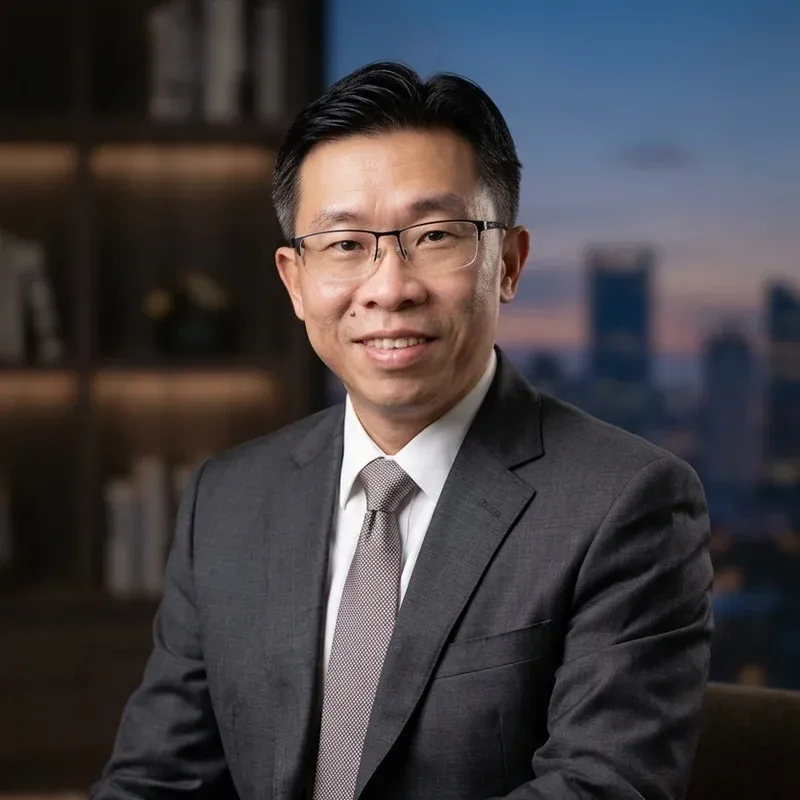
Founder of Spark Launchpad and certified venture-creation instructor and mentor across NUS, NTU, SUSS and SMU programmes, drawing on twenty-five years as a corporate innovation leader, technopreneur and inventor with twelve patent families.
Why this course
Twelve patent families is not a number I set out to accumulate. It is what happened over twenty-five years of being the person in the room who kept asking whether an idea was actually protectable before someone spent real money building around it. I have watched brilliant engineers lose the commercial value of their own work because nobody asked that question early enough, and I have watched founders patent the wrong thing entirely because they treated IP as paperwork rather than strategy.
I teach venture creation at NUS, NTU and SUSS because I believe the gap between a good deep-tech idea and a fundable venture is not usually talent. It is sequencing: validate before you build, protect before you disclose, and know the difference between a trade secret and a patent before a term sheet forces the decision for you. This course is the compressed version of what I have spent a career doing for other people's inventions, and I still find genuine satisfaction in watching a founder leave a four-hour session with a business model canvas that actually holds up to the question I ask hardest: would I put my own money behind this.

Syllabus
Six segments across four hours
Left with a validated business model canvas for one real venture, an IP-protection and commercialisation plan, and a go-to-market sequence, built for a founder's or corporate innovation team's own idea, not a generic startup framework.
-
20 min
Framing
The venture or technology idea in the room.
- One real venture, corporate spin-out or deep-tech concept, brought into the room
- What stage the idea is actually at, versus what its founder assumes
- The question every investor will ask first: would I put my own money behind this
OutputVenture brief
-
55 min
Business Model Canvas, applied
Validating assumptions against the room's own idea rather than a case study.
- The Business Model Canvas, worked live against the room's own idea, not a case study
- Which assumptions are actually validated, and which are just hoped for
- The lean-startup practicum method behind it, drawn from NUS, NTU and SUSS venture programmes
OutputDraft business model canvas
-
15 min
Break
-
1 hr
Deep-tech IP strategy
What to patent, what to keep as trade secret, and when, drawn from twelve patent families across cybersecurity and energy optimisation.
- What to patent, what to keep as trade secret, and when
- Sequencing protection before disclosure, not after
- Drawn from twelve patent families across cybersecurity and energy optimisation
OutputIP-protection plan
-
1 hr
Go-to-market and funding sequence
Positioning the venture for its next real funding, grant or commercialisation decision.
- Positioning the venture for its next real funding, grant or commercialisation conversation
- What a term sheet or grant reviewer will actually check first
- Sequencing go-to-market against the IP position just built
OutputGo-to-market and funding brief
-
30 min
Roadmap and close
- The business model canvas, IP plan and funding brief brought into one document
- A 90-day venture roadmap, ready for the next real conversation
Output90-day venture roadmap
Who should attend
A real idea, not a finished plan
-
Founders & technopreneurs
Founders and technopreneurs validating a venture idea before committing further time or capital.
-
Corporate innovation leads
Corporate innovation leads scoping a spin-out or internal venture.
-
Researchers & inventors
Researchers and inventors deciding how to protect and commercialise a technology.
Facilitator
Patrick Ng
Venture Creation Instructor & Deep-Tech Mentor
Twenty-five years turning deep technology into ventures that scale, twelve patent families among the proof.
Read the full profile ›Common questions
Before you enquire
-
Do I need a fully formed startup idea to attend?
No. An early idea, a corporate spin-out concept, or a technology in progress works well. The session's purpose is to validate and structure it, not to review a finished plan.
-
Is this only for deep-tech or engineering ventures?
The IP-strategy segment is strongest for deep-tech and patentable technology, but the Business Model Canvas and go-to-market segments apply to any venture, technical or not.
-
Will this help with a specific grant or funding application?
The go-to-market and funding segment positions the venture for its next real funding, grant or commercialisation decision, though this is not a grant-writing session.
-
What should participants prepare in advance?
One venture idea or technology, real or in progress, with a rough sense of the problem it solves and who would pay for it. No reading or technical prep needed.
-
Is there a discount for sending more than one person, or booking more than one course?
Yes. Organisations sending leadership through more than one course, or through a course and its integrated programme, get a combined rate rather than separate bookings. See the corporate and bulk enrolment section on the workshops page, or raise it directly in your enquiry.
-
What if I need to cancel, defer or a session is rescheduled?
Full terms for individual, open-cohort and corporate in-house bookings, including deferral windows and what happens if Praxora Lab cancels a session, are set out in the refund and cancellation policy.
-
What happens after the session ends?
Every cohort joins a standing network of practitioners and business leaders: ongoing networking events, fireside chats, and case study interviews with business owners and C-suite leaders on AI projects they've recently completed. The named facilitator also stays the point of contact for questions on applying what was covered.
Industry engagement
A network that keeps working after the workshop ends
Every cohort at Praxora Lab joins a standing network of practitioners and business leaders, not a one-off attendee list. Alumni are invited back for ongoing networking events, fireside chats with industry experts, and case study interviews with business owners and C-suite leaders on AI projects they have recently completed, a running view of what adoption actually looks like once the workshop room empties.
The learning experience
A small cohort, led by the practitioner who built the course
Every session is capped at a small cohort and taught in person by the practitioner who built it, not a teaching assistant working from someone else's slides. Participants work against one real team's own workflow rather than a generic case study, and leave with a draft they can put to use immediately.
A named facilitator, not a support desk, stays the point of contact after the session for questions on applying what was covered.
Investment
Open cohort or corporate in-house
Open cohort
On enquiry
Per participant, max 24 participants
- Certificate on completion: Certificate of Completion, Praxora Lab
- Draft business model canvas
- IP-protection plan
- Go-to-market and funding brief
- 90-day venture roadmap
Corporate in-house
On enquiry
Fixed programme fee, max 24 participants
- Everything in the open cohort
- Dedicated session for one organisation's venture or spin-out
- Fixed fee, not priced per head
Full cancellation, deferral and refund terms are set out in the refund and cancellation policy.
Enquire about upcoming dates