 PRAXORALAB
Start automation with the gap assessment, not the robot
A grant-funded robotics line is judged at commissioning but won or lost in the first documents written. The sequence behind a robotic carton-removal line for imported egg shipments shows why.

Veronica Loh
Co-Founder & Head, Operations · Managing Director & Chief Sustainability Officer · Praxora Lab

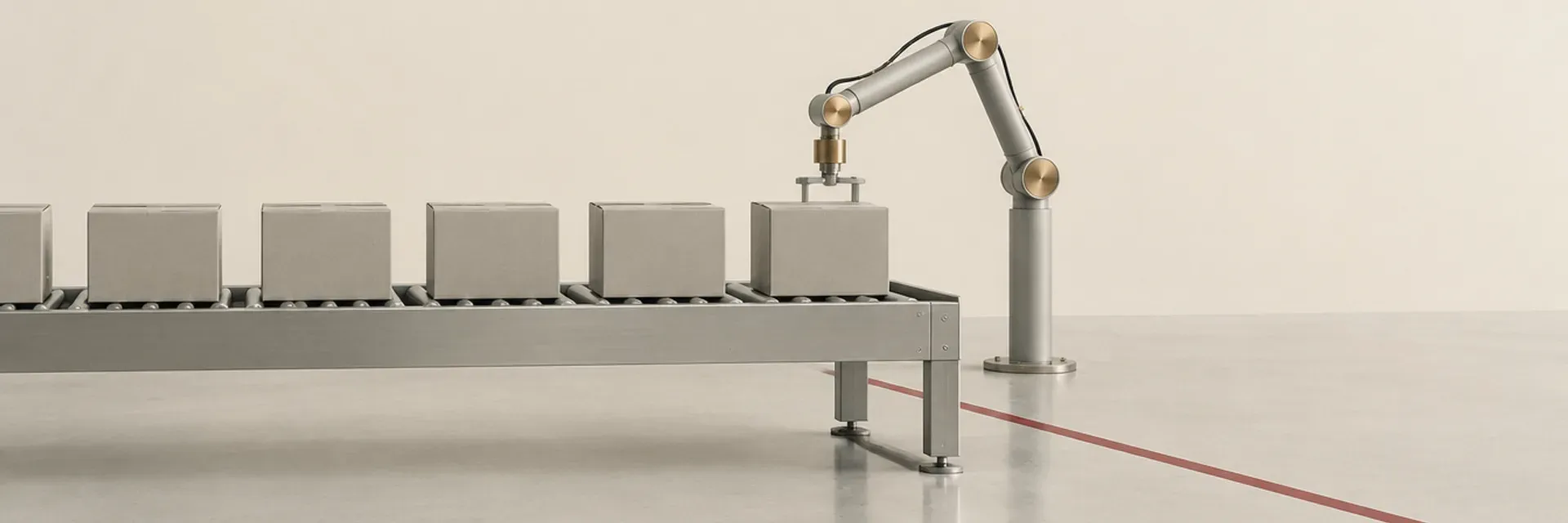
A robotic carton-removal line for an egg distributor, funded through an Enterprise Development Grant, replaced manual unboxing of imported shipments end to end. The result was a gain in operational efficiency of over a thousand percent and far less dependence on manual labour. The part worth studying is not the robot. It is the order in which the work was done: gap assessment, mechanisation design, grant proposal support, then project management of design, development and commissioning.
The gap assessment comes first because every later number depends on it. It measures the manual process as it actually runs: throughput per hour, labour hours, breakage, and the variation between a good shift and a bad one. Automation has to beat that real baseline, not the version in the vendor's brochure. A project that skips this step discovers at commissioning that it cannot say whether it improved anything.
Mechanisation design then happens before any equipment is chosen. For imported shipments the inputs vary, in carton type, in pack format and in condition on arrival, and a robotics case that depends on repetition will not survive that variation. Writing down the range of inputs the line must handle turns a loose wish into a specification a supplier can price and be held to.
The grant proposal is best treated as the business case in a different format. When it is written from the gap assessment, every figure traces back to something measured, eligible costs are identified early, and the reviewer sees a project with a clear problem and a clear payback. A proposal written separately from the engineering tends to contradict it at the first review.
Commissioning is where early shortcuts surface. Acceptance criteria should be agreed during design, not negotiated at handover, so that both sides know what finished means. The same applies to safety: the boundary of what the machine may do, and what stops it, belongs in the design documents from the start.
A note on the headline number. A percentage gain over a manual baseline mostly reflects how slow the baseline was. Report the absolute throughput and the cost per case as well, since those are what a finance team will check a year later.

Veronica Loh
Co-Founder & Head, Operations · Managing Director & Chief Sustainability Officer
Co-founder and Head of Operations at Praxora Lab, and Managing Director and Chief Sustainability Officer of Orion Five Engineering, with twenty-six years managing business operations across logistics, food technology R&D, manufacturing mechanisation and digitalisation in Singapore and the region.
Praxora Lab runs twelve half-day courses and three full-day integrated programmes, each led by a named practitioner, turning frameworks like this one into a deployment roadmap.
© 2026 Praxora Lab. Author: Veronica Loh. Read online at praxoralab.com/insights/start-automation-with-the-gap-assessment-not-the-robot